
Creating a safe sleep environment for your baby isn’t just about comfort, it’s about protecting your little one’s life. Following the American Academy of Pediatrics’ recommendations can protect against sleep-related risks, and Duly pediatrician Dr. Jonette Belicena also shares expert guidance to help keep your baby safe.
The Risks
All babies under the age of one are at risk for sudden infant death syndrome (SIDS). Although the causes for SIDS are unknown, it is widely accepted that environmental factors could play a role in keeping your baby safe while they are sleeping. Because babies have low muscle development, they aren’t able to roll away from objects that could interfere with their breathing. Here’s what you can do to help create a safe sleeping environment for your baby.
Prenatal Care and Reducing SIDS Risk
Consistent prenatal care significantly reduces your baby’s SIDS risk by allowing your healthcare provider to monitor your baby’s development, address risk factors early, and provide personalized safe sleep education tailored to your family’s needs.
Creating a Safe Sleep Environment
Before your baby arrives, discuss any questions about safe sleep practices with your pediatrician. They’ll provide recommendations based on your baby’s specific needs, guidance on sleep positioning, and tips for creating a safe sleep environment.
Room Sharing
Keeping your baby’s sleep space in your room (but not in your bed) cuts SIDS risk in half. This helps you monitor the baby’s breathing and movement and respond quickly to concerns.
CPSC Safety Standards for Baby Sleep Products
Only use sleep products that meet Consumer Product Safety Commission requirements. Cribs must meet current safety standards, and bassinets should be specifically designed for infant sleep. Play yards should only be used for sleep if approved for overnight use. Before setting up your baby’s sleep space, visit CPSC.gov for current recall information. You can register your products to receive automatic recall notifications.
Space Preparation
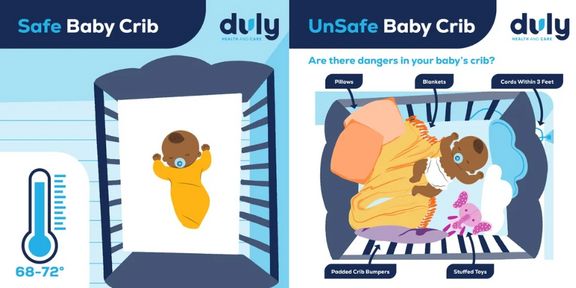
The safest sleep environment has only a firm mattress and a fitted sheet, nothing else. No blankets, pillows, bumpers, or toys should be in the crib. The mattress should fit snugly with no gaps. Your baby’s sleep space should look empty to an adult; this “bare” environment is the safest possible setup for your little one.
Safe vs. Unsafe Sleep Environments for Babies
Back Sleeping
Always place your baby on their back to sleep. This single action is the most powerful way to prevent SIDS. Back sleeping keeps airways clear and reduces risk dramatically. When your baby starts rolling over, continue placing them on their back initially, but once they can roll both ways independently, it’s safe to let them choose their position. Keep the crib completely clear of all objects throughout this process.
Safe Sleep Checklist
Room Temperature: 68 – 72°F
- Keep the room comfortably cool for you in light clothing
- Use a room thermometer to monitor temperature
Bedding and Clothing:
- Firm mattress with only a fitted sheet
- Sleep sacks
- One more clothing layer than you’re wearing
- No hats
Look for signs Baby is Overheating:
- Sweating or damp hair
- Hot chest
- Flushed, red skin
Remove Sleep Hazards Such as:
- Blankets, pillows, bumpers, toys
- Loose sheets or clothing
Letting babies sleep on soft bedding increases their suffocation risk by 16 times.
Daily Practices to Promote Safe Sleep
Breastfeeding Protection & Pacifier Timing
Breast milk strengthens your baby’s immune system and promotes lighter sleep patterns, helping babies wake when needed. Breastfeeding is recommended for the first 6 months, then continue to breastfeed alongside solid foods for up to 2 years or longer.
Research shows pacifiers significantly reduce SIDS risk, even if they fall out during the night. For safe pacifier use, never reinsert it if it falls out during sleep, avoid any strings, clips, or attachments, and don’t force it if your baby refuses the pacifier.
If you’re breastfeeding, wait to give your baby a pacifier until they’re about one month old. If you’re formula feeding, you can start using a pacifier right away. If your baby refuses the pacifier, try different shapes but never force it.
Tummy Time for Development
Supervised tummy time strengthens your baby’s muscles, prevents flat head syndrome, and promotes healthy motor development. Start with just a few minutes, try to work up to 15 – 30 minutes a day by 7 weeks old. Try using colorful toys or different surfaces to keep them engaged, and always stay with your baby during tummy time.
Emergency Situations & What to Avoid
If Baby Falls Asleep in Car Seat or Swing
Move baby to a crib immediately when you’re able to do so. Prolonged sitting can compromise breathing and increase suffocation risk.
When Baby is Sick
Safe sleep becomes even more critical during illness since respiratory infections increase SIDS risk. Keep placing your baby on their back to sleep, and monitor their temperature closely. Contact your pediatrician if you have any concerns about your baby’s health or sleep patterns.
Overheating Emergency Actions
If your baby shows signs of overheating, take immediate action. Remove extra clothing, move to a cooler room, and use a fan pointed away from your baby. Offer fluids and contact your pediatrician if symptoms persist.
Unsafe Products to Avoid
Never use weighted blankets, swaddles, or other sleep products. Avoid inclined sleepers with angles greater than 10 degrees. Skip bumper pads and positioning devices entirely. They create safety risks for your baby and offer no proven benefits.
Following these evidence-based guidelines gives you and your baby the best chance for safe, quality sleep. Consistency is key, so follow safe sleep practices for every nap and nighttime. When in doubt, choose the safest option and trust your instincts, don’t hesitate to ask questions.
Speak with your pediatrician at your next appointment to discuss concerns about your baby’s sleep patterns, questions about safe sleep products, SIDS risk factors, or need personalized sleep safety guidance. Schedule an appointment with Dr. Belicena or another Duly pediatrician today. >
Health Topics:
-
 I enjoyed partnering with parents as we navigate through their children's developmental milestones, behavioral challenges, childhood illnesses, and achievements. I love being there with them in their journey.


