
Every parent knows the mix of joy and worry that comes with those first days with a newborn, taking in every little movement, every tiny feature. For Thays N., caring for her son Noah meant navigating both.
Though Noah was born healthy and full-term, his size and position during pregnancy had left him with very little room to move before he was even born.
“During pregnancy, he stayed in the same position for a long time,” Thays shared. “He was born at 40 weeks and was a bigger baby, so there wasn’t much space in my belly.”
That limited space led to torticollis—tightness in the neck muscles that causes babies to favor one side — and plagiocephaly, a flattening of the head that can develop when a baby rests in the same position repeatedly. Thays noticed that Noah consistently preferred looking in one direction and resisted turning the other way.
With guidance from her pediatrician, Annais Santiago, MD, with Duly Health and Care, she began repositioning techniques at home. When improvement was limited, her pediatrician recommended physical therapy for additional support. It was the next important step in Noah’s journey.
At your baby’s regular checkups, take a moment to talk with your pediatrician about head shape, tummy time, and easy exercises that support healthy development. Learn more about our Pediatrics team >

A Connection That Made All the Difference
Finding the right therapist mattered deeply, especially when it came to communication.
“Since my first language is Portuguese and my second language is Spanish, it was very important for me to find someone who could communicate in Spanish,” Thays explained. That’s when they met Kelly Hernandez, PT, DPT, a physical therapist at Duly.
Did you know? You can search for Duly providers by the languages they speak to find a healthcare provider who can communicate with you and your family in your preferred language. Search our team of healthcare providers >
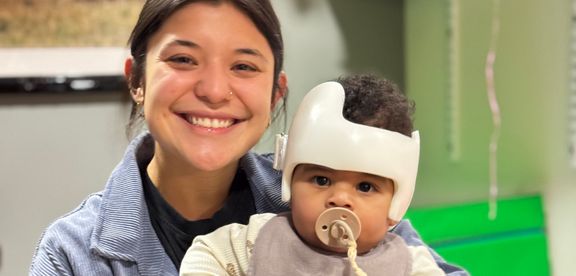
“From the very first appointment, I felt an immediate connection with her. I felt understood,” Thays said.
Kelly, who speaks Spanish, knows how critical that connection can be.
“The family would drive 30 to 35 minutes for appointments, and I wanted to make sure every session felt worthwhile,” she shared. “When families make that kind of commitment, it’s important they feel heard and supported.”
That trust carried into every therapy session, especially when things weren’t always easy. Noah experienced significant reflux, which sometimes made sessions challenging.
“Kelly was extremely attentive, gentle, and caring with Noah,” Thays shared. “He has significant reflux, especially during therapy sessions, and he would regurgitate quite a bit. I was always a little worried about that, but Kelly never made me feel uncomfortable. She reassured me every time, saying it was completely normal, and continued the exercises with so much care and professionalism. That meant so much to me as a mom.”
For Kelly, flexibility is key.
“If a baby is uncomfortable, therapy isn’t effective,” she explained. “I read Noah’s body language and adjusted activities or took breaks so he stayed comfortable. That way, we get the best therapeutic benefit. It’s always about meeting patients where they are and making sure they feel safe and supported.”
Empowering Parents for Lasting Progress
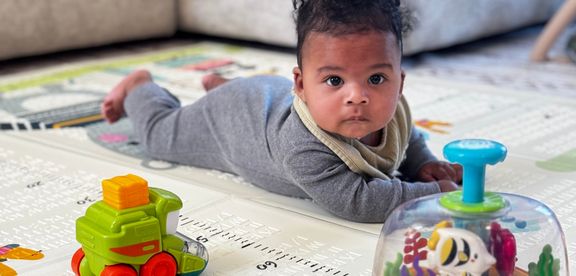
From the beginning, Kelly’s goal wasn’t just to treat Noah during weekly sessions, it was to equip Thays with tools she could confidently use at home. Real progress, she knew, would happen in the everyday moments between appointments.
“When I first saw him, one of my main goals was educating his mom on positioning,” Kelly said. “Babies this young aren’t rolling yet, so movement depends entirely on the caregiver. I taught her how to incorporate stretches and positioning into their daily routines without disrupting their flow.”
Therapy became part of everyday life.
“After each diaper change, I suggested doing little baby sit-ups to strengthen his neck muscles,” Kelly explained. “Pairing therapy with everyday activities helps it become a natural part of the day rather than something extra.”
She emphasizes just how important the time between therapy sessions is.
“Our patients spend one to two hours a week with us. The lasting changes happen because parents continue those activities at home. The time they spend with their children far outweighs what I can do in therapy. When parents feel confident and empowered, that’s when we see real progress.”
And progress came.
“After about two and a half months of physical therapy, Noah became 100% free from torticollis,” Thays said. “Kelly consistently took measurements, explained everything in detail, and taught me all the exercises to do at home. She was always available to answer my questions and guide me whenever I needed help.”
Due to plagiocephaly, Noah also needed to wear a helmet, but thanks to consistent therapy and repositioning techniques, his head shape improved significantly.
“The exercises and repositioning techniques Kelly guided made a huge difference,” Thays said. “Because of that progress, he will likely need to wear the helmet for a shorter period of time.”
Celebrating Milestones
For Kelly, watching babies grow stronger is one of the most rewarding parts of her work.
“Depending on the child, I may work with them for a few weeks or a few months, and watching that growth is incredibly special,” she said. “It’s heartwarming to know that both the parents and I had a part in that progress. Seeing these little ones graduate from physical therapy ready to take on the world is one of the most rewarding parts of what I do.”
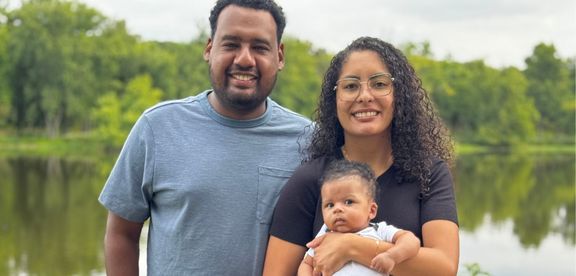
Today, Noah is thriving.
“Noah is completely free from torticollis, and I am incredibly grateful for Kelly’s dedication, kindness, and expertise,” Thays said. “We couldn’t have asked for a better physical therapist for our son.”
Duly offers physical therapy at more than 30 locations across the Chicago suburbs, making it easy to find care close to home. Learn more about our Physical Therapy team >
Health Topics:


