
For Eve M., there was a reasonable explanation for the lump she felt in her right breast. She had recently stopped breastfeeding her youngest son, and after breastfeeding both of her boys, she knew her breasts could feel different during the transition.
With two young children and a busy life as a first-grade teacher, breast cancer wasn’t something she expected. Still, Eve knew her body well enough to recognize when something felt different, so she made an appointment at Duly Health and Care to have the lump checked.
A mammogram and ultrasound showed concerning findings, prompting her doctors to recommend biopsies. “I wasn’t immediately thinking, this could be cancer,” she said. “I remember being told that the imaging was highly suspicious, but I still don’t think I truly believed it would be cancer.”
Then the biopsies came back, and everything changed.
What Eve initially thought might be related to breastfeeding turned out to be breast cancer that had already spread to the lymph nodes under her arm. Suddenly, the everyday routines of motherhood and teaching were interrupted by appointments with surgeons and oncologists, decisions, and an entirely unexpected diagnosis.
“I think the first feeling was disbelief,” she said. “There was fear, obviously, but there was also this immediate feeling of, ‘Okay. What do we need to do?’”
That single question became the compass for everything that followed.
Something feel different? Get it checked.
Like Eve, you know your body best. If you notice a lump, swelling, skin changes, or anything that doesn’t feel normal for you, don’t wait it out. Talk with your Duly provider, who can examine you and order imaging if needed.
Taking It One Step at a Time
The weeks after Eve’s diagnosis moved quickly. There was little time to process the diagnosis before Eve found herself navigating a new reality. With so much information coming at once, it was easy to feel overwhelmed. But Eve quickly realized she didn’t need to understand the entire road ahead to keep moving forward.
“I learned very quickly that you don’t have to figure out the entire journey at once. You just have to figure out the next step,” she said. “That has probably been one of the biggest lessons of this whole experience.”
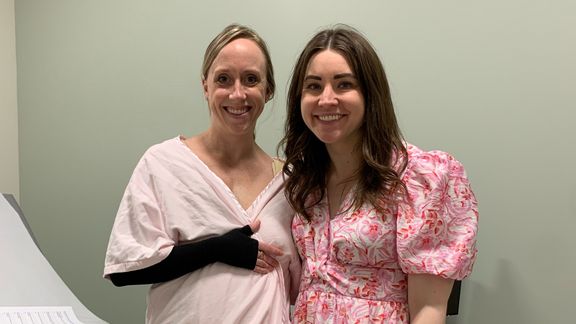
That mindset guided her as she and her husband, Colin, worked with her Duly care team to determine the best course of treatment. Guiding her along the way is Anna Chichura, MD, FACOG, FACS, breast surgeon; Sudha Yarlagadda, MD, medical oncologist; Amishi Bajaj, MD, radiation oncologist; and Mohammed Asif, MD, plastic surgeon.
From the beginning, Eve said her doctors made both her and Colin feel cared for and included in decisions about her treatment. “They take the time to sit with us and answer our questions at every appointment. I never feel rushed,” she said. “They explain things in a way that we can understand and make us feel like we’re partners in the decisions about my care.”
For Eve, having three cancer doctors who are women relatively close to her age has been particularly meaningful. As a young mother facing an unexpected diagnosis, that connection has helped her feel understood as a whole person, rather than simply a patient chart.
“As a 37-year-old mom of two facing breast cancer, I really feel like they understand more than just the medical side of what I’m going through. They understand the fear. They understand that I’m not just trying to survive cancer; I want to maintain my quality of life and continue being a mom, a wife, a teacher and myself throughout this process.”
Among her care team, Dr. Chichura became a source of reassurance early on. “When I was first diagnosed, she was a source of calm and confidence during an incredibly frightening time.”
Before Eve had even met her, Dr. Chichura had begun ordering additional imaging and testing to keep the process moving forward. At their first appointment, Dr. Chichura spent more than an hour listening to their concerns. Later, when a PET scan showed something requiring further review, Dr. Chichura personally called them after hours.
“That moment has stayed with me because she made me feel like a person, not just a diagnosis or a chart,” she shared. “She has continued to advocate for me throughout my treatment, especially when there hasn’t been one obvious path forward.”
A whole team in your corner
At Duly, breast surgeons, medical oncologists, radiation oncologists, and plastic surgeons work together to build a treatment plan around you. They take time to answer your questions and include you in every decision.
Explore Breast Cancer Care at Duly ›
Moving Forward with Treatment
Diagnosed with Stage IIIA breast cancer, Eve and her care team weighed whether surgery or chemotherapy should come first, ultimately recommending a right skin-sparing mastectomy and axillary lymph node dissection, which she underwent in August.
Dr. Chichura performed the procedure, a surgery Eve felt completely confident placing in her hands. Final pathology revealed a 4‑centimeter, grade 3 invasive ductal carcinoma, high-grade DCIS, and cancer in six of the 18 lymph nodes removed. Fortunately, there was no known evidence of distant metastatic disease.
For Eve, surgery was an important milestone, but only one part of a much longer journey. “I am still very much in active treatment, so this is a story that is still being written.”
She is now undergoing weekly chemotherapy. Afterward, she expects roughly five weeks of radiation, followed by long-term hormone therapy due to her hormone-receptor-positive status, alongside potential medications to further reduce recurrence risk.
Rather than looking too far down the road, Eve continues to anchor herself in the present. “It can be overwhelming to think about everything that is still ahead, so I try not to look at the entire road at once. I focus on the treatment that’s in front of me and remind myself that every round is one step closer to being on the other side of this.”
Every step, coordinated
From surgery to chemotherapy, radiation, and reconstruction, your Duly care team keeps your treatment connected so you can focus on the step in front of you.
Find a Duly Breast Cancer Specialist ›
The People Beside Her
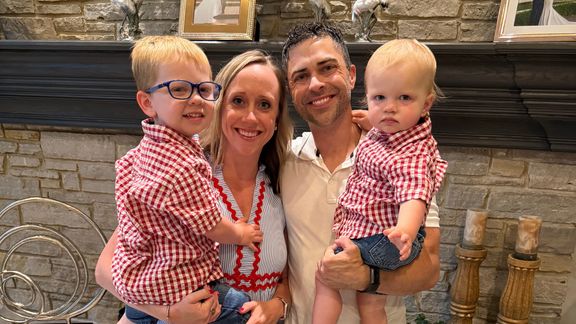
While Eve’s Duly care team guides her treatment, the support of her husband, Colin, and their loved ones has helped her navigate the challenges along the way. Colin has been by her side through appointments and difficult decisions, while their family, friends and coworkers have stepped in to help care for their two young boys, ages 3 and 17 months.
“People have just shown up for us in ways that I never could have imagined,” Eve said.
As she continues through treatment, Eve is taking the journey one step at a time, supported by the people who have helped her navigate each new challenge. She knows there are still difficult days ahead, but she feels confident knowing she doesn’t have to face them alone.
“I don’t know exactly what the next year is going to look like, but I know I don’t have to figure it all out today. I just have to keep taking the next step.”
Breast cancer can happen at any age
Eve was 37 when she was diagnosed. Regular screening and knowing what’s normal for your body can help catch breast cancer early, when it’s most treatable. Talk with your Duly provider about when to start mammograms and how often you need them, especially if you have a family history of breast cancer.
Health Topics:


